
The Hino City Two-Child Arson Murders: Yukie Kitamura, Intent and the Life Sentence
A fire at an apartment in Hino, Tokyo, on December 14, 1993, killed a six-year-old girl and a one-year-old boy. Yukie Kitamura was convicted of arson and murder; her life sentence became final in 2001.
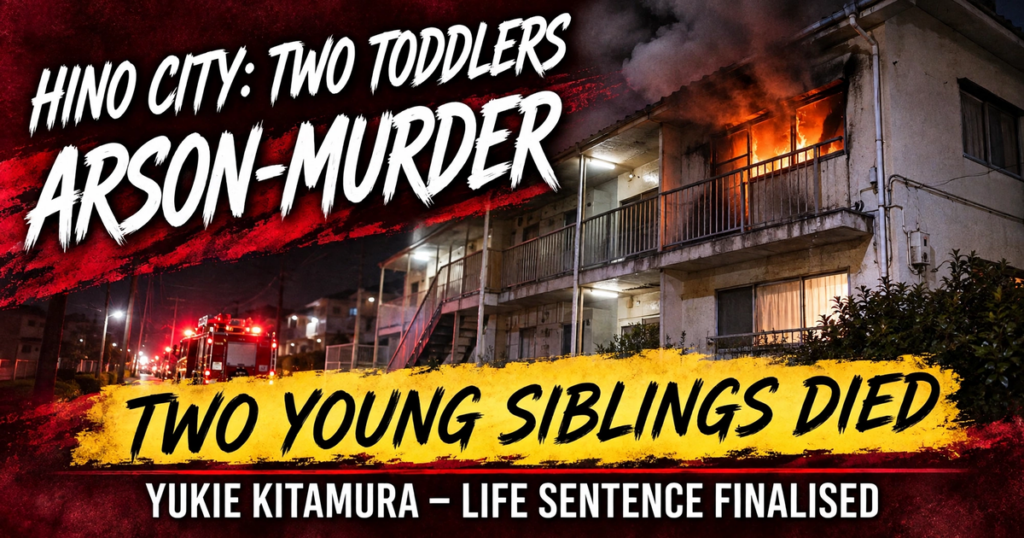
Two young children died in an apartment fire in Hino
In the early morning of December 14, 1993, a fire broke out in an apartment in Hino City, Tokyo. A six-year-old girl and a one-year-old boy who were inside the apartment died. The person convicted of setting the fire was Yukie Kitamura, who was twenty-seven at the time and was in a relationship with the children's father. The case was long referred to in some reporting as an 'affair-related arson murder', but the central victims were the two children. They were not participants in the adults' relationship or the dispute that preceded the fire. The criminal proceedings focused on Kitamura's entry into the home, the arson and whether she intended the children to die.
The relationship with the children's father had begun around 1990
According to later reporting based on long-term interviews, Kitamura's relationship with a married supervisor began around 1990. The man had a wife and children, and Kitamura was reportedly told that he would divorce and marry her. She became pregnant in 1992 and had an abortion, and became pregnant again in 1993 before a second abortion. In May 1993, the relationship became known to the man's wife. The wife had the man telephone Kitamura to end the relationship, and Kitamura came to understand that the promise of divorce and marriage was not going to be fulfilled. These details help explain the background reported by the source, but they do not excuse the later attack or transfer responsibility for it to the family.
The dispute continued into the autumn of 1993
After the relationship was exposed, Kitamura and the man's wife exchanged repeated telephone calls and arguments. In November 1993, the matter moved into family-court mediation. The Japanese source article uses this sequence to avoid reducing the case to the single word 'affair'. The relationship had deteriorated over a period of years, and the dispute involved the man's promises, the two pregnancies and abortions, the wife's discovery and attempts to end the relationship. These circumstances were part of the background reported by later journalists. They are not a judicial finding that the wife or the children caused the offence, and they should not be used to suggest that the children were responsible for the conflict.
Kitamura entered the apartment with a duplicate key
On the morning of December 14, Kitamura waited until the children's mother had left to take her husband to the station. She then entered the apartment using a duplicate key, spread gasoline inside and set the fire. The ignition caused an explosion, and Kitamura herself was blown away from the scene. She fled, leaving one sneaker behind. The six-year-old girl and one-year-old boy remained inside and died. The established account is that Kitamura entered the residence, used gasoline and set the fire. The Japanese source specifically warns against repeating a sensational claim that she poured gasoline directly onto the sleeping children; later reporting identified that detail as erroneous.
The trial was not a complete denial of the arson
Kitamura did not maintain that she was wholly innocent of setting the fire. The major dispute at trial concerned whether she had intended to kill the two children. She challenged the finding that she had the intent required for murder, even while the fact that she had set the fire was not the same kind of disputed issue. The court had to examine what she knew about the apartment, the children inside it and the likely consequences of setting a fire in their home. Arson and murder are separate legal questions: the fact that a fire caused deaths does not automatically answer what the defendant understood or intended at the time.
The defense also argued diminished capacity
A second issue was whether Kitamura's mental condition at the time of the crime substantially reduced her criminal responsibility. The defense referred to the emotional strain arising from the relationship, the pregnancies and abortions and the breakdown of the relationship. The Japanese source distinguishes that psychological distress from the legal test for diminished capacity. Under criminal law, strong emotion or suffering alone is not enough. The question is whether the ability to distinguish right from wrong, or to act in accordance with that judgment, was substantially impaired. The courts did not accept the defense position in a way that changed the final result. The murder conviction and life sentence remained in place.
A life sentence was imposed in 1996 and became final in 2001
The Tokyo District Court sentenced Kitamura to life imprisonment in January 1996. The Tokyo High Court dismissed her appeal in 1997. The case then continued to the Supreme Court, which dismissed her final appeal in 2001, making the life sentence final. It is important not to confuse the date of the first-instance judgment with the date on which the sentence became final. The trial and appeals continued for more than five years after the first judgment. The final legal conclusion was that Kitamura was guilty of the arson and murders, including the intent to kill the children, and that she would serve a life sentence.
Later writings and cultural references do not change the judgment
After the sentence became final, Kitamura wrote accounts that were published in the magazine 'Sō'. Later interviews described her objections to aspects of the trial while also indicating that she did not claim to be wholly innocent of the crime. Those writings are material for understanding her later account, not a new judicial finding. The novel The Eighth Day of the Cicada by Mitsuyo Kakuta has also been described as having been inspired by the case, but the novel is fiction and its plot must not be treated as evidence about the real events. The current legal position remains a final life sentence. No later retrial or acquittal was identified in the sources reviewed for this record.
Original Japanese record: 日野市幼児2人放火殺人事件|北村有紀恵が争った「子どもへの殺意」と無期懲役確定
Last updated:
Related articles

Case record
The Shinjuku West Exit Bus Arson: Six Deaths and a Life Sentence After Diminished Capacity Was Found

Case record
The Nagoya University Student Murder: Criminal Responsibility, Earlier Poisonings and a Final Life Sentence
Case record
The Matsudo Female University Student Murder-Arson: A Death Sentence Replaced by Life Imprisonment

Case record