
The HIV Blood-Product Scandal: Non-Heated Clotting Factors, Three Criminal Cases and the 1996 Settlement
During the 1980s, more than 1,400 people with haemophilia in Japan were infected with HIV through non-heated blood-clotting factor products. The products were made from pooled plasma collected from many donors, creating a risk that contaminated blood could expose many patients. Civil claims against the state and pharmaceutical companies were settled on March 29, 1996. Criminal proceedings followed three distinct routes: former executives of Midori Juji, a former Ministry of Health official, and physician Takeshi Abe. Their cases produced different outcomes, including final prison sentences, a mixed conviction and acquittal, and an acquittal that was never reviewed on the merits by an appellate court.
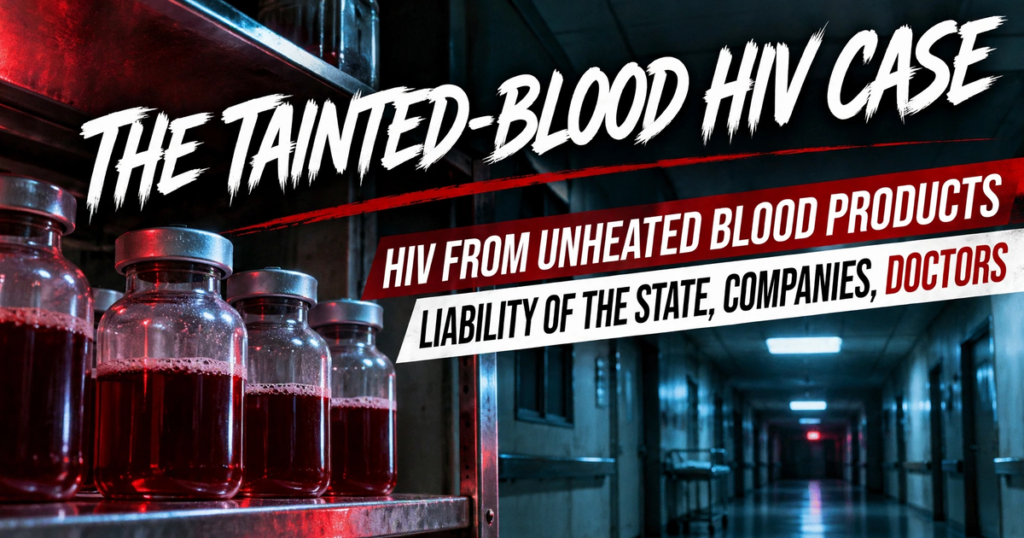
Non-heated clotting products were essential medicines for people with haemophilia
During the 1980s, people with haemophilia in Japan were treated with blood-clotting factor products that helped control bleeding. At the time, many products were made from plasma collected from large numbers of donors. The plasma was pooled and processed into a single batch. This production method created a serious risk: if infected blood entered the pool, the resulting product could expose many patients. When evidence emerged that HIV could be transmitted through blood, the safety of non-heated clotting factor products became a critical medical and regulatory issue.
More than 1,400 patients were infected
More than 1,400 people with haemophilia in Japan were identified as having contracted HIV through the use of contaminated blood products. The affected group included patients who depended on clotting factor treatment to manage a serious inherited bleeding disorder. The infections were not the result of ordinary contact between patients or of personal behaviour; they were linked to medical products used as treatment. The number of infections and the later deaths caused profound harm to patients and families, and the scandal raised questions about how quickly the authorities and manufacturers had acted on emerging safety information.
The delay in switching to heated products became a central issue
As international evidence about HIV and blood products developed, heat-treated products became an important way to reduce the risk of viral transmission. The Japanese proceedings examined what information the pharmaceutical companies, the Ministry of Health and medical specialists had received, when they could have understood the danger, and when they could reasonably have changed practice. Non-heated products remained in use during a period when warnings about blood-borne infection were growing. They were removed from the market by July 1988, but many infections had already occurred.
Civil lawsuits led to a national settlement on March 29, 1996
Victims filed civil claims against the government and pharmaceutical companies from 1989. The cases were brought in the Osaka and Tokyo District Courts. On March 29, 1996, the parties reached a settlement following court mediation. The government and the companies accepted responsibility in the settlement, and the Minister of Health apologised to the victims. The state also promised to work with survivors on permanent support measures and to take steps to prevent similar drug-related harm. The settlement was a civil resolution; it was separate from the criminal trials against named executives, an official and a physician.
The Midori Juji proceedings concerned former company presidents
One criminal route involved former presidents of the pharmaceutical company Midori Juji. Three former presidents were prosecuted in connection with a patient who died after receiving a non-heated product. The case examined whether the executives had known enough about the danger to stop distribution or use and whether their failure to act contributed to the death. The three defendants did not contest the central facts in the same way as a fully disputed trial, and the proceedings focused heavily on the circumstances and degree of responsibility of each former executive.
Two former executives received final prison sentences
In February 2000, the Osaka District Court convicted the three former presidents. One defendant, Kawano Takehiko, died while the appeal was pending, and the proceedings against him were dismissed. On August 21, 2002, the Osaka High Court reduced the sentences for the two surviving defendants, Matsushita Renzo and Suyama Tadakazu, to one year and six months and one year and two months respectively. The Supreme Court rejected their appeals in June 2005, and the convictions became final. This route established criminal responsibility for two former company executives, while the third defendant's case ended because of his death.
The Ministry of Health route produced a mixed result for Matsumura
A separate criminal case involved Matsumura Akihito, who had served as director of the Ministry of Health's Biological Products Division. The prosecution examined whether he had failed to use the ministry's authority to restrict non-heated products after the danger became sufficiently clear. In 2001, the Tokyo District Court imposed a one-year prison term, suspended for two years, for one death, while acquitting him in relation to another alleged incident. On March 25, 2005, the Tokyo High Court maintained that mixed result and rejected both appeals. Matsumura alone appealed further. On March 3, 2008, the Supreme Court dismissed his appeal, making the partial conviction final. The judgment recognised a duty to act in one factual setting but did not find criminal negligence for every alleged infection.
The case against physician Takeshi Abe ended without an appellate merits judgment
A third route involved Takeshi Abe, a physician and professor at Teikyo University who had also led a Ministry of Health research group. He was prosecuted over the use of non-heated products for patients. The Tokyo District Court acquitted him on March 28, 2001. The prosecution appealed, but proceedings were suspended because of Abe's health. He died on April 25, 2005, and the appeal ended through dismissal of the prosecution. The acquittal therefore remained, but the appellate court did not issue a substantive judgment reviewing the evidence on the merits.
The three criminal routes must not be merged into one verdict
The HIV blood-product scandal did not produce one criminal judgment against a single group of defendants. The Midori Juji route resulted in final prison sentences for two former presidents. The Ministry route produced a conviction for one alleged death and an acquittal for another, with the Tokyo High Court maintaining that result. The Abe case ended after a first-instance acquittal because the defendant died before the appeal could be decided on its merits. These procedural differences matter. The civil settlement of 1996 also remains distinct from each criminal case.
Permanent support continued after the courtroom proceedings
The 1996 settlement created a framework for continuing medical, welfare and financial support. The needs of survivors changed as they aged, and some faced overlapping health problems, including hepatitis infections associated with blood products. The Ministry of Health and the support organisations have continued medical assistance, health management and efforts to preserve the history of the scandal. The case remains a warning about pooled blood products, the speed of safety decisions and the responsibilities of companies, public officials and medical professionals when evidence of a serious risk emerges.
Original Japanese record: 薬害エイズ事件|非加熱血液製剤でHIV感染、国・製薬会社・医師を問うた3つの刑事裁判
Last updated:
Related articles

Case record
The Daisetsuzan SOS Mountain Incident: A Giant Signal, a Recorded Cry for Help and a Corrected Bone Identification

Case record
The Kyoto Gion Runaway Van Crash: Seven Pedestrian Deaths, a Driver's Medical History and Changes to Driving-Licence Rules
Case record
The One-Hundred-Million-Yen Find in Ginza: Hisao Ohnuki and the Six-Month Wait for an Unknown Owner
Case record