
The Kinhiro Case: Two Murders, the Sumata Gorge Hostage Standoff and a Separate Life in South Korea
On February 20, 1968, Kinhiro shot and killed two men in Shimizu, Shizuoka Prefecture, after a financial dispute involving organised-crime figures. He fled to a mountain inn in Sumata Gorge and took guests and staff hostage. During the standoff, he used the attention of reporters to speak about discrimination against Korean residents of Japan. He was arrested on February 24. A life sentence imposed in 1972 became final in 1975. After spending about 24 years in prison, he was paroled and moved to South Korea in 1999. A separate assault, confinement and arson incident followed in 2000; he died in Busan in 2010.
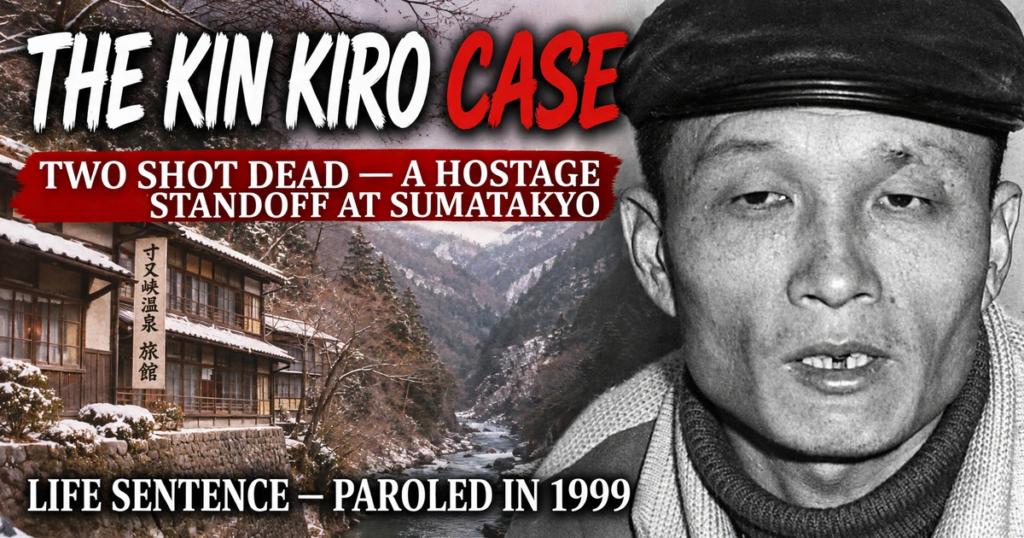
Two men were killed before the hostage standoff began
On February 20, 1968, Kinhiro shot and killed two men in Shimizu, in what is now Shizuoka City. The immediate background involved a financial dispute with people connected to organised crime. He fled with firearms and other weapons and made his way toward the mountain area of Sumata Gorge. The shootings and the later public confrontation became closely linked in popular memory, but they were distinct stages. The killings arose from a specific dispute; the public statements about discrimination became prominent after he had taken hostages.
The standoff began at an inn in Sumata Gorge
Kinhiro entered an inn at Sumata Gorge Hot Spring and took guests and employees hostage. Police surrounded the area, and a large number of reporters gathered near the inn. The standoff continued for several days, with negotiations and extensive media coverage. On February 24, police entered the inn and arrested him, bringing the hostage-taking to an end. The hostages were released. The event was unusual not only because of its duration and location but also because the media were allowed unusually close access to the person holding the hostages.
He used the media to speak about discrimination against Korean residents
During the standoff, Kinhiro spoke to reporters and communicated his complaints about discrimination against Koreans in Japan. His statements made the event a national social and political issue as well as a criminal case. The media coverage brought attention to the experiences of Korean residents and to the way law enforcement and society treated minority communities. This context is important, but it should not be used to obscure the immediate cause of the two killings. The financial dispute preceded the hostage-taking and was separate from the discrimination claims made during the standoff.
The criminal case ended with a final life sentence in 1975
Kinhiro was arrested on February 24, 1968. In June 1972, the Shizuoka District Court sentenced him to life imprisonment. The case continued through appeals, and the Supreme Court dismissed the final appeal in 1975, making the life sentence final. He was not sentenced to death. The final legal result concerned the 1968 shootings and hostage-taking. It did not decide any later conduct that occurred after he was released from prison and moved to South Korea.
The prison term lasted about 24 years after the sentence became final
Kinhiro spent approximately 24 years in prison after the life sentence became final. The period from his arrest in 1968 to his release in 1999 was longer because it included pretrial detention and the years of court proceedings before the sentence became final. Keeping those periods separate avoids the misleading statement that he served 31 years after the final life sentence. The distinction also helps explain why his release in 1999 was a parole decision, not a reversal of the conviction.
He was paroled and moved to South Korea in 1999
On September 7, 1999, Kinhiro was paroled and moved to South Korea, settling in Busan. The release did not mean that he had been acquitted or that the 1968 conviction had been overturned. He remained a person serving a life sentence who had been released on parole. In South Korea, some people initially viewed him as a figure who had publicly challenged discrimination against Koreans in Japan. He gave talks and received attention because of the historical significance attached to the 1968 standoff.
A separate incident in 2000 led to another arrest
In September 2000, Kinhiro was arrested in South Korea after an incident involving a woman with whom he was in a relationship and her husband. Reports described him threatening and confining the husband and setting fire to property. The incident was investigated as a separate offence, including attempted murder and arson-related conduct. It was not a reopening of the 1968 murder case, and it did not change the final Japanese judgment for the two killings. The later incident marked a distinct chapter in his life after parole.
He died in Busan in 2010
Kinhiro died in Busan in March 2010. His death came more than four decades after the original shootings and hostage standoff. The sequence matters: the 1968 murders and hostage-taking led to a life sentence that became final in 1975; he was paroled and moved to South Korea in 1999; a separate criminal incident occurred there in 2000; and he died in 2010. Those events should not be compressed into a single continuous legal proceeding.
The case has two histories that must be read together but not confused
The Kinhiro case remains significant because the hostage standoff brought the experience of discrimination against Korean residents into national debate. It is also a serious double-murder case with a final life sentence. A careful account must recognise both facts without implying that one cancels the other. His public statements during the standoff, his years in prison, his parole and his later life in South Korea belong to different stages of the record. The 2000 incident and his 2010 death must never be mistaken for part of the original February 1968 crime.
Original Japanese record: 金嬉老事件|2人射殺から寸又峡の人質籠城、無期懲役と韓国移送後まで
Last updated:
Related articles
Case record
The Serial Murders of a Colleague and His Wife
Case record
The Kikugawa Family Triple Murder: Three Relatives Killed, Defendant on Trial in Hamamatsu
Case record
The Hamamatsu Girls' Bar Double Murder: Two Victims, an Atami Rescue Report and a Trial Awaiting Judgment
Case record