
The Former Yokohama Principal Case: Child Sexual Exploitation and the Figure of 12,660
Former school principal Takashima was arrested in 2015 after police investigated sexual activity and images involving girls in the Philippines. The widely reported figure of 12,660 was a long-running photographic index, not a court finding that all those people were children or proven victims.
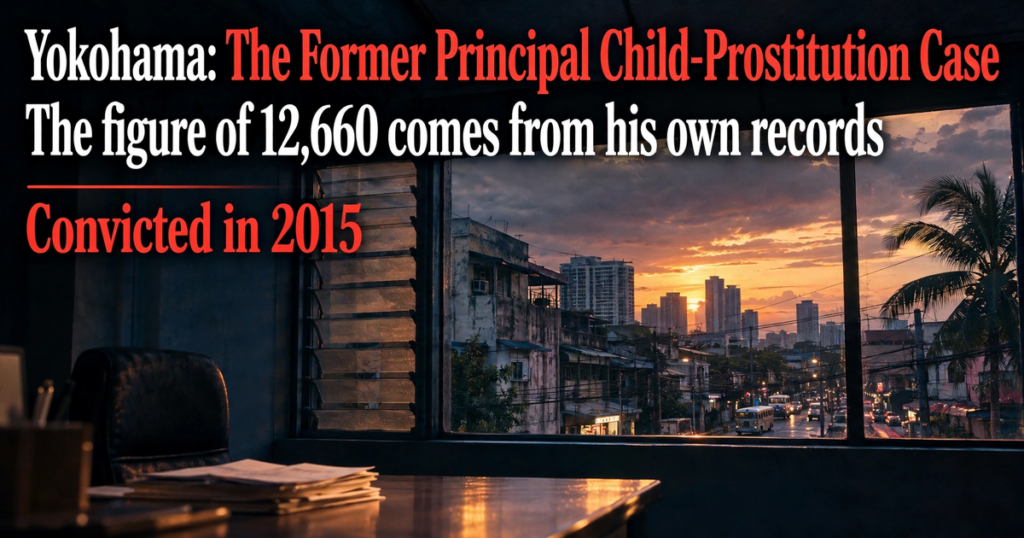
A former middle-school principal was arrested over conduct in the Philippines
On 8 April 2015, Kanagawa Prefectural Police arrested Takashima, then 64, a retired former principal of a Yokohama municipal junior high school. The direct allegation concerned a hotel in Manila, where he was suspected of recording sexual activity with a girl believed to be about 13 or 14 and retaining the image data. The case attracted attention because Takashima had been an educator and school principal, a role involving responsibility for children's safety and education. The arrest, however, was only the beginning of the criminal process. It is important to distinguish the specific conduct alleged and later adjudicated from the much larger numbers reported in connection with the material found at his home.
The number 12,660 referred to a photographic index, not 12,660 proven child victims
Reports about the investigation frequently used the figure 12,660. The Japanese article explains that Takashima had kept photographs of women with individual numbering and filing arrangements. The index reportedly reached the 12,000 range, producing the widely repeated total of 12,660. That figure was not a judicial finding that 12,660 children had been sexually exploited. Reports indicated that the material included adult women as well as younger people, and the courts did not examine every numbered entry to determine age, payment or conduct. The distinction is fundamental: a large investigative record may suggest a long history of activity, but it is not equivalent to a count of victims whose cases were individually proved in court.
Investigators reported approximately 147,600 photographs and more than 400 albums
The material seized from Takashima's home was reported to include approximately 147,600 photographs and more than 400 albums. The images had been organized over a long period rather than existing only as a small collection associated with the 2015 arrest. Takashima reportedly said that he had taken photographs to preserve memories. That explanation did not remove the criminal nature of making or possessing prohibited sexual images involving children. The defence also relied on the absence of an intention to sell or distribute the photographs as a mitigating consideration. Neither the reported number of images nor the number of albums should be converted into an assumed number of criminal offences. The prosecution had to identify conduct that fell within the relevant statutes and prove it in court.
Takashima's connection with the Philippines dated back to his teaching career
Takashima's connection with the Philippines began well before the arrest. In 1988, while working as a teacher in Yokohama, he was assigned to a Japanese school in Manila for approximately three years. Reports of his statements to investigators indicated that he began buying sex while posted there. After returning to Japan around 1991, he continued to travel to the Philippines. Media reports described a statement that he had made approximately 65 return trips. These details were reported as part of the investigation and should not be mistaken for separate convictions. In Japan, he continued working as a teacher. He became a municipal junior-high-school principal in 2008 and remained in that position until retirement in 2011.
The investigation began before the public arrest in 2015
According to reporting summarized in the Japanese article, police had been investigating Takashima from around 2013. Investigators examined the large quantity of photographs, the dates on which images were made, the ages of the people depicted and the circumstances of the alleged conduct. The immediate arrest allegation related to an incident in Manila around January 2014 involving a girl believed to be 13 or 14. The case also included allegations concerning images of two girls believed to be 12 or 13 in around December 2013 and another girl in January 2014. The volume of material meant that investigators had to separate the broader reported history from the specific acts that could be charged.
The criminal trial focused on a limited number of alleged acts
The prosecution did not charge Takashima with one consolidated offence covering every person represented in the photographic index. The central trial allegations concerned the production of child sexual-abuse images and related conduct involving particular girls, together with an offence under the Explosives Control Act. Takashima admitted the charged facts. This is why the popular description that he was convicted of buying sex from 12,660 people is legally inaccurate. The number was a reported investigative index, while the court decided the offences set out in the indictment. The distinction also prevents an equally inaccurate inference that every person in the photographs was a child or that every image was individually adjudicated.
The Yokohama District Court imposed a suspended sentence in December 2015
On 25 December 2015, the Yokohama District Court sentenced Takashima to two years' imprisonment, suspended for four years. The prosecution had sought a two-year prison term. The court criticized his exploitation of the economic hardship faced by children in the Philippines and the harm that such conduct could cause to their healthy development. It also considered his long career in education and his service as a school principal. A suspended sentence is still a conviction and a sentence of imprisonment; it is not an acquittal. It means that execution of the prison term is suspended for the specified period, subject to the legal conditions. The result should not be described as a finding that the conduct was harmless or that the defendant was cleared.
The case requires a careful separation of public scale and proven criminal conduct
The case became widely known through the combination of Takashima's former position as a principal, the reported 12,660 photographic entries and the approximately 147,600 images. Those figures describe the reported scale of material and the investigation, not the number of children whose abuse was proved at trial. The criminal judgment was based on the specific charges and evidence before the Yokohama District Court. The article also notes that Yokohama City had been reported to be examining the return of approximately 30 million yen in retirement benefits, but that issue is separate from the criminal sentence. The responsible account is therefore neither to minimize the offences nor to exaggerate the adjudicated victim count. It must preserve the distinction between investigation, indictment, admission, conviction and the suspended sentence.
Original Japanese record: 横浜市立中学校元校長買春事件|「1万2660人」の記録と裁判で立証された児童被害
Last updated:
Related articles

Case record
The Satosho Guesthouse Sexual Assault Case: Ten Female Victims and a 26-Year Prison Sentence Upheld

Case record
The Chiba University Medical Students Sexual-Assault Case: Four Defendants, Different Charges, and Different Sentences

Case record
The Keio University Advertising Society Allegations: Six Referred to Prosecutors and All Not Prosecuted
Case record